
Trust building activities for teams are structured exercises designed to strengthen collaboration, communication, and mutual confidence among team members. These activities focus on creating safe environments where individuals feel comfortable sharing ideas, taking responsibility, and supporting one another.
In modern workplaces—especially in the UAE, where organizations increasingly invest in structured team-building activities—trust is no longer optional. Teams that operate with trust demonstrate higher engagement, stronger performance, and better long-term stability. Purposeful team trust exercises help organizations move beyond surface-level interaction toward meaningful cooperation and psychological safety.
What Are Trust Building Activities for Teams?
Trust building activities for teams are intentional exercises that encourage openness, reliability, and mutual respect within a group. Unlike general team-building activities that may focus primarily on fun or morale, trust-focused exercises address deeper interpersonal dynamics such as vulnerability, accountability, and communication.
These activities are often delivered through facilitated team-building workshops that help teams engage meaningfully rather than superficially.
Why Trust Matters in Team Environments
Trust is the foundation of effective teamwork. Without trust, teams rely on control, micromanagement, and rigid processes that limit creativity and efficiency.
High-trust teams benefit from:
- Faster decision-making
- Clearer communication
- Stronger accountability
- Higher engagement and morale
Leadership trust strategies that emphasize transparency and consistency are increasingly incorporated into corporate event programs in the UAE to support long-term team performance and alignment.
Core Types of Team Trust Exercises
Trust building activities can be grouped into several categories, each addressing different aspects of team dynamics.
Communication-Based Trust Exercises
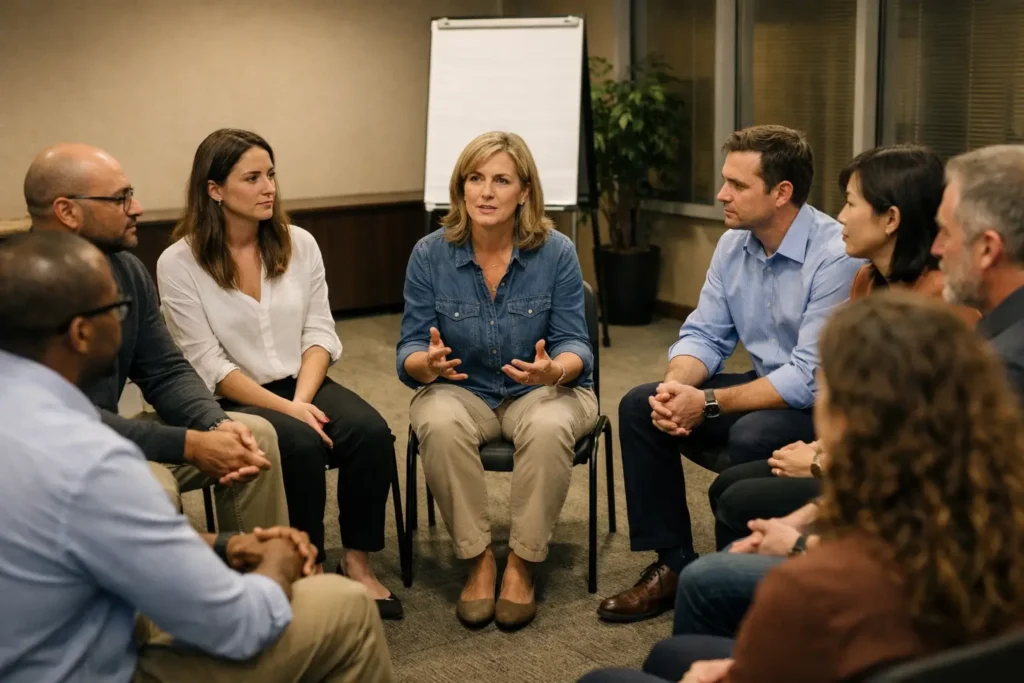
Exercises such as active listening drills and trust listening circles focus on clarity, empathy, and understanding. These activities are often integrated into corporate team-building activities to strengthen communication in professional environments.
Physical and Experiential Trust Activities
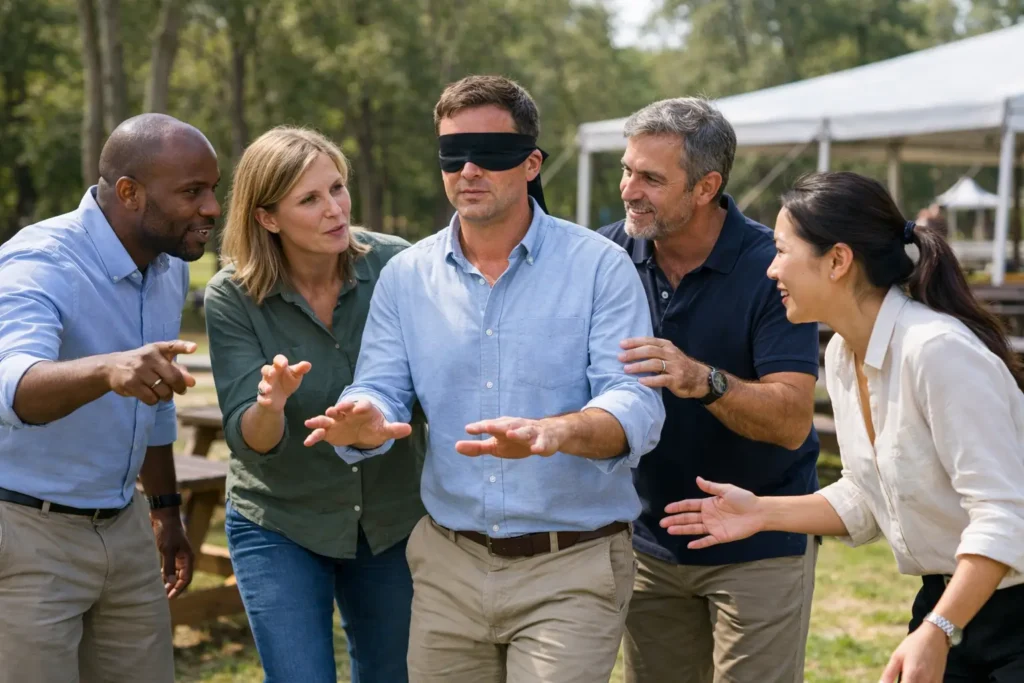
Experiential activities like trust fall exercises and blindfold trail challenges require participants to rely on guidance and cooperation. These activities are commonly part of outdoor team-building programs where trust is built through shared physical experiences.
Problem-Solving and Collaboration Challenges
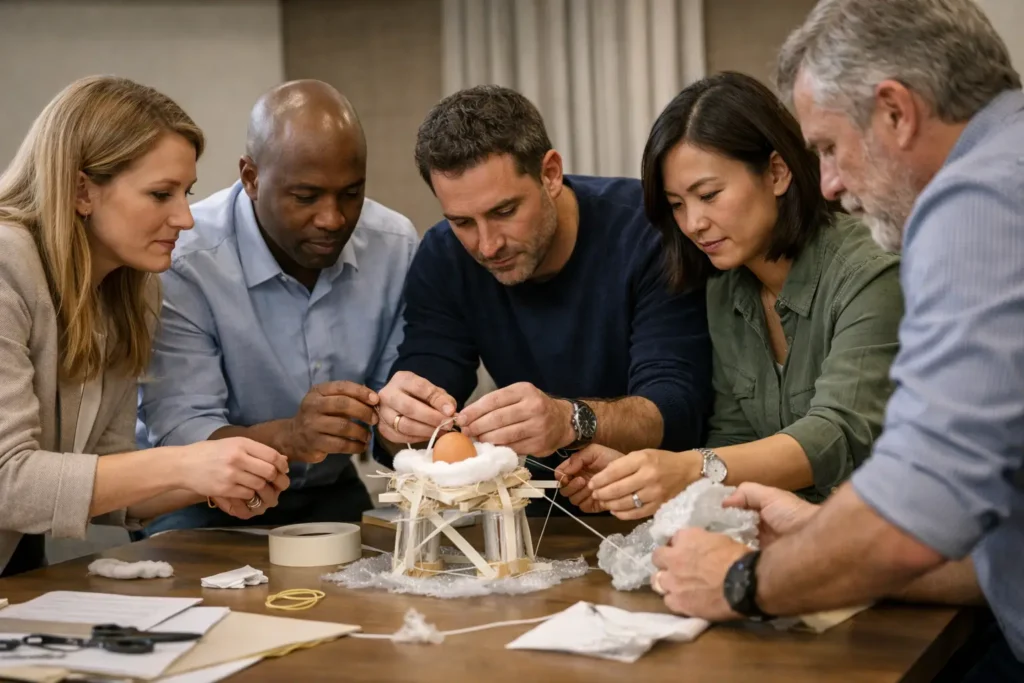
Collaboration challenges such as the egg drop challenge emphasize shared responsibility, planning, and accountability. These exercises are frequently used in structured corporate team experiences to strengthen decision-making under pressure.
Popular Trust Building Activities Explained
Understanding how specific trust building activities work helps teams select exercises aligned with their objectives.
1. Two Truths and a Lie
This activity encourages openness and personal connection, making it ideal for early-stage team bonding or onboarding sessions.
2. Blindfold Trail
The blindfold trail emphasizes reliance on others through verbal communication and guidance, reinforcing trust and leadership awareness.
3. Egg Drop Challenge
Teams collaborate to design solutions while managing shared risk, making this activity effective for developing accountability and cooperation.
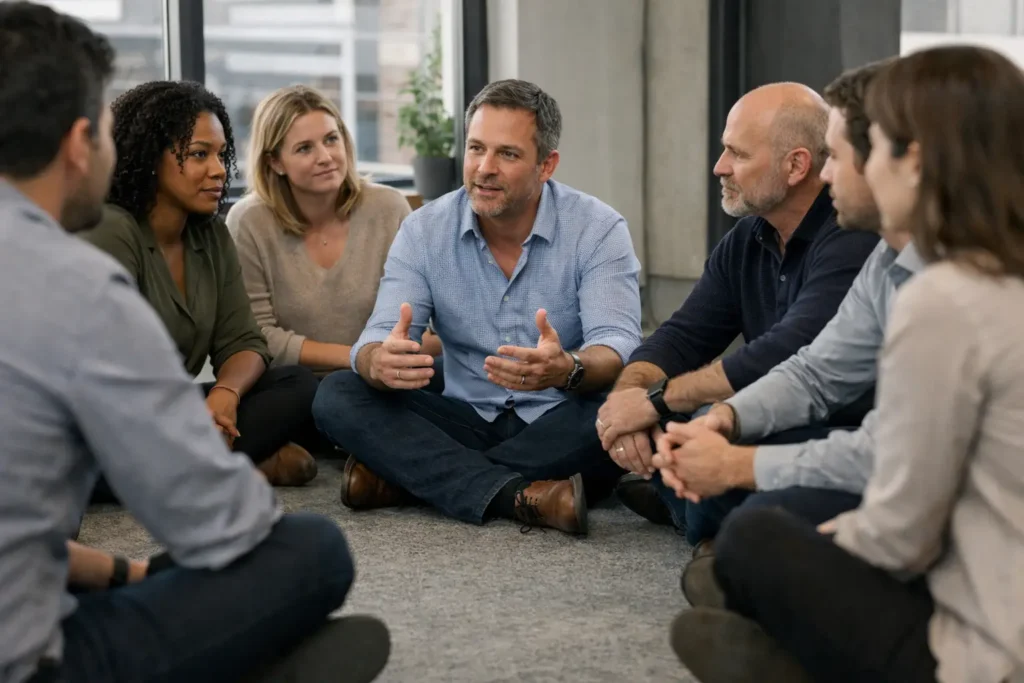
4. Trust Listening Circle
Trust listening circles support psychological safety and respectful communication, often facilitated during professional team workshops.
Trust Building Activities for Different Team Types
Effective trust-building adapts to how teams work together.
Workplace Team Bonding Activities
For on-site teams, trust building activities improve daily collaboration and reduce interpersonal friction. These exercises are commonly included in workplace team-building programs across the UAE.
Remote Trust Building Activities
Remote trust building focuses on communication and emotional connection through structured virtual exercises, listening drills, and vulnerability sessions.
Leadership and Management Teams
Leadership teams benefit from trust exercises that promote transparency and accountability. These activities are often embedded within corporate event management programs to align leadership behaviors with organizational values.
Psychological Safety and Vulnerability in Teams
Psychological safety allows individuals to speak openly without fear of negative consequences. Trust building activities play a key role in creating this environment.
Facilitated group vulnerability sessions help teams normalize learning, acknowledge challenges, and strengthen empathy—outcomes commonly associated with well-designed corporate team-building initiatives.
How Often Should Teams Practice Trust Building Activities?
Trust is built through repetition and consistency rather than one-time events.
Recommended approaches include:
- Quarterly trust-building workshops
- Short trust exercises during regular meetings
- Ongoing feedback and reflection sessions
This approach mirrors best practices used in long-term team development programs.
Trust Building Activities vs Traditional Team Building
Traditional team building often emphasizes enjoyment and social interaction. Trust building activities go deeper by addressing vulnerability, accountability, and communication.
Organizations that prioritize trust-focused exercises often see stronger long-term results than those relying only on recreational activities.
FAQs: Trust Building Activities
Yes. When facilitated properly, they significantly improve communication and psychological safety.
Yes. Many activities are specifically designed to help new teams establish trust early.
Yes. Structured virtual trust exercises are effective when communication is prioritized.
They range from short sessions to full-day workshops.
Yes. Facilitation ensures safety, structure, and meaningful outcomes.
Final Thoughts
Trust building activities for teams offer a structured and effective way to strengthen collaboration, communication, and psychological safety. Through purposeful team trust exercises, organizations can move beyond surface-level bonding toward deeper, more sustainable trust.
Across the UAE, companies that integrate trust-building into their team-building and corporate event strategies are better positioned to foster resilient, high-performing teams.